[00:00:00] Welcome to the Closeness podcast. The following is based on both personal experiences and wisdom, as well as personal experiences that have been contributed to us. Generalizations are sometimes made for the sake of brevity, but are never meant to exclude or offend. Regardless of your gender identity, relationship status preferences, or sexual orientation, it's our sincere hope that you can take away something positive, constructive, and use full from each topic explored. You can support these podcasts by donating to our Patreon at Forward slash closeness. Now, are you ready to come closer? Let's get started. Hello friends. Welcome back to another edition of Closeness. My name is Tari and today we're exploring the question Is it a deal breaker if you don't have the same hobbies and passions as your boyfriend or girlfriend or current partner? And if you don't, how can you communicate your needs about them to your partner? Kind of the way having the same diet and eating lifestyle has become so important to people, so too have these passions and hobbies that we have a friend of mine recently asked me something in the vicinity of Do I have expectations around my partner being present or involved in the activities that I'm passionate about? And I could tell that she was asking based on something from her own past and her own experience with her partner having expectations from her. As it turned out, part of the difficulty that her and a previous partner shared together was his expectation that she show up at his different meets, events, and training sessions where she had no other choice but to sit there and watch. She couldn't speak, she couldn't participate, and she couldn't even videotape to show her support. So in essence, she would have to sit behind a glass wall and simply watch while her partner did what he did. And I think if anyone puts themselves in her shoes, they would feel right away. That sounds a little absurd. What obligation does a partner have to do that, especially if it's something that they don't even care about or aren't even into?
[00:02:04] So is it a deal breaker if your partner doesn't support you in the way you'd like? Or are we being unreasonable in our expectation of what we want and think our partner should do for us? And are we even capable of doing that for them? These are some really powerful, really incredible questions to jump right into that. I think it's a little absurd if you have a passion or a hobby or something that makes you sore and you happen to be with someone who's not into it, to expect them to be anywhere near the vicinity of your passion about it and that includes being upset if they're not.
[00:02:45] Part of what makes living today so exciting is the millions and millions of things to be excited about. All of our lives are so varied. We are intrinsically connected to so many different passions. It doesn't make any sense that everyone would share the same type of excitement for the same things. It's illogical to expect your partner to love what you do beyond being awesome about it, showing up to a couple of events here and there when he or she can, and being proud or excited for you. And I'll explain why. If you take a moment to visualize what you're passionate about right now, what hobby do you have or have you had in the past that you just go nuts for if you're a man? Maybe it's some type of sport or spectator sport. Maybe it's watching sports. Maybe you've got an unusual passion for photography. Maybe you collect something. Maybe you are an aficionado of wine or cigars. It could really be anything. And then picture some stuff that you couldn't care less about and just flicker mentally back and forth between what you love and what you're passionate about, and feel the interest in your chest and your excitement bubble up, and then feel the total deflation that comes from thinking about something that you have zero interest in. So I'll speak from my own experience. When I was in college, around 20 years old, I was dating a girl much older than me who was around 27, 28. We always went fine dining together, and when we did that, we always paired something with a red or white wine. And so I very quickly began to learn about the wine world and what the different hints and notes and flavors were and how the legs looked when they dripped down the glass and all of this stuff. And even though I've never been much of a drinker, there was a period in my life where with dinner, we'd always have some wine and compare notes about it and enjoy it together. It was something she very much enjoyed. When that relationship came to a close, I pretty much never had any interest in alcohol. Again, the phrase I often use when I speak about it is, it just never occurs to me to want to have a drink. So for all intents and purposes, and I know this goes against much of the rest of the entire universe, who I'm speaking to. When people talk about having a drink or getting a drink or just going out for drinks or offering drinks, like none of that has any appeal to me on any level. So if I meet someone who heavily enjoys wine or who has a wine cellar distributes wine or has anything to do with alcohol. It turns out that I have an appreciation for it because of something that happened many years ago in my past, but it no longer interests me anymore.
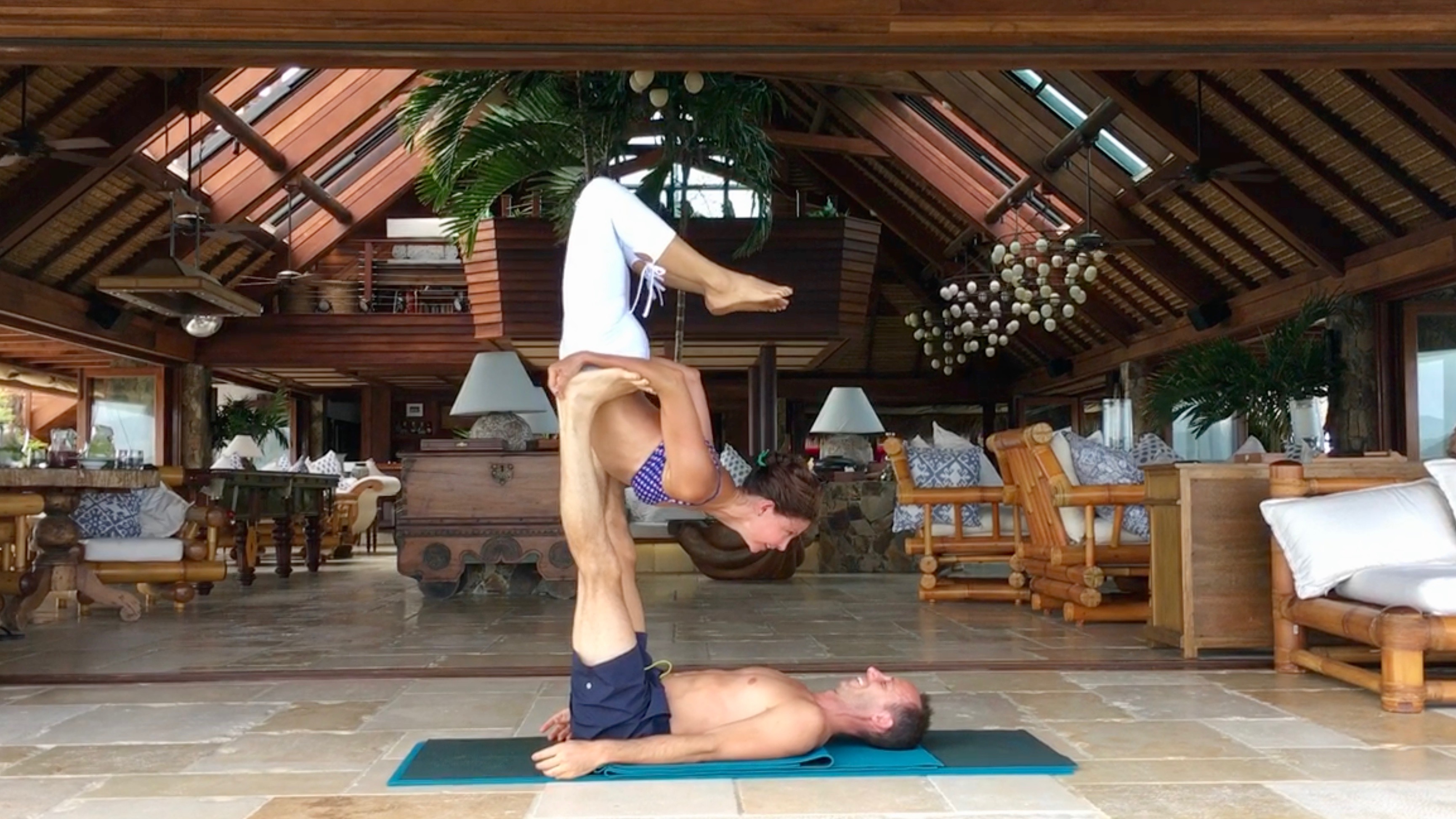
[00:05:22] Should I be expected to turn up at wine events, have a glass now every night because my friend or partner likes it, drink it all the time, or suddenly have a reinvested passion in it because my partner loves it? Absolutely not. And I feel the same way with my passions, which are a little unusual. So this is the first time I'm mentioning it, but it probably won't be the last. I have an incredible, unquenchable, unbelievable passion for balancing people over my head in a handstand. It's called hand to hand. It's a circus art. It's an acrobatic art. And it starts with someone either jumping in or being pushed into a handstand right at my shoulder level and then taking them up overhead.
[00:06:09] Does it seem fair to the rest of the nonacrobatic world that I expect my partner to turn up at my meetings, performances, jams, seminars, discussions, blogs, dinners, social hours, movie events, festivals, five day immersions, seven day residential retreats, and everything pertaining to acrobatics? Because I love it. Even if she's in love with me, even if she wants to support me, and even if she believes that what I do is incredible, I say no. I say she's under no obligation to do it. I think it's beautiful to make the sacrifice, and hopefully it doesn't feel like a sacrifice. But I believe that anytime someone is giving of their time to you to do something that they wouldn't normally do or put on their schedule is in some way a bit of a sacrifice. They could be doing so many other things in life, but they're choosing to support your tennis match, karate meeting, real estate investor workshop, ski trip, house purchase, Airbnb, venture wine tasting workshop, and that sort of thing. Now, at the same time, what can be more touching than when your partner shows up to something that's important to you, to support you? That brings tears to my eyes. I love that. I'm touched by that. I'm moved by that. And I think in a committed partnership, there is sort of an unspoken rule that this is just what you do. You show up for your partner, you're there for them, you surprise them, you delight them, and you demonstrate that you value them and care for what they're passionate about, that is an amazing gift. But to expect it or be upset that someone isn't supportive enough.
[00:07:55] This is the dangerous territory. And that's why I'm giving all this preliminary. Why is it dangerous? It should be so simple. But sometimes I think we have such a hard time getting out of our own heads. Just think for a minute about anything that you're not passionate about.
[00:08:10] I'm thinking of a female friend who is very passionate about taxidermy. Think of something in your head that you just don't care about. What would it take for you to, multiple times a week, sit in front of a television and say, watch a knitting show with someone who loves knitting? So too, when it comes to what you're passionate about, you exclusively, uniquely, are passionate about it. You shouldn't expect or even be surprised that your partner, who maybe isn't built the same way or doesn't get excited about the same things as you do. You shouldn't be surprised that they really have no interest. That is what makes life so juicy. Well, you might think to yourself, what should you do? I will be with someone who shares the same passions as I do because I'm so passionate about it. So to take my example, I'm extremely passionate about acrobatics. Well, for it to actually healthily work out well, ideally, I want to be with someone at the same level as I am acrobatically. That's a very tall order, because being at the same level acrobatically, like just call it a whiz at handstands, or someone who's able to hold their shape when they're upside down extremely well and they're the right size for my size. And we have good acrobatic chemistry, and our grip feels great. If everything lines up, that doesn't necessarily mean that our pheromones, our chemistry, our sexual compatibility, our communication skills, the way we navigate ourselves in the world, how we treat other people, and our fundamental beliefs about life will. And on the other hand, to be fair, it might certainly be enhanced by that. Sometimes you can be completely taken by surprise and discover that not only do you share a strong passion with someone, but you also have an incredible romantic or sexual chemistry as well. It's there. And much like attraction, you can feel it instantly when both people are feeling the same way. So you think to yourself, well, how wonderful to share the same hobbies with someone. I'll just find a boyfriend or girlfriend who loves to do what I do.
[00:10:15] However, if you ask anyone who shares a hobby with someone else, and believe me, I have asked many, almost inevitably, we treat our sexual partner worse than we do anyone else who's new, who might want to learn about this hobby? This means that as a general rule, most partners are less patient with their lovers, their husband or wives, or their boyfriend or girlfriend than they would be with someone who they've never met before. And this is especially so if you are extremely talented at something or you've been doing it for five or ten or 15 or 20 years. It's very challenging to take someone who's new and green, even if they're exciting and have the tolerance and the understanding to bring them up to speed and to be patient with them. Even though I believe it's a virtue, it's an incredible skill to practice. We ought to be the most patient we can with our partner, more so than anybody else. But somehow, some way, it always feels easier to be a little gentler, a little kinder, a little more patient with someone who you may have never even met before because you're never going to see them again. But when you're dating someone, you want them to get all the good stuff. You want to help them be as perfect as they can at it. You want to give them all the tips and all the right ways to do it. And so there can be a little bit of static and butting heads there as well. Then if you think to yourself, wow, this is amazing. I live my passion. I love my passion, and my boyfriend or girlfriend shares the same passion. Now we are living with each other every day, waking up, driving together, eating together, training together, practicing together, going through ups and downs, emotional trials and tribulations together.
[00:12:05] That's another very tall order. And there are, from what I've seen, precious few people in the universe who are capable of having a sustained, healthy, intimate, positive sexual relationship that's high in communication and trust and understanding. You can make a life out of devoting yourself to a partner who does the same thing as you do. But more often than not, what I see through all different communities around the world is it's beautiful at first, and then there's a lot of butting heads, a lot of bickering, resentment, frustration, ego, patience, a lot of triggers, a lot of things come up. And sometimes your own boyfriend or girlfriend, you just don't have the magic with in terms of the hobby. And if that goes away and then they start having the magic or the intimacy or the closeness with someone else, and you better believe that's certainly possible, then jealousy arises, and it naturally should. That's why I always advise couples, if they know right away that there might be some tension there, to just give themselves permission to have a playful practice, an exploration that has no goal or outcome. No one's trying to be better or perfect or master anything. Just let it be a fun experience together if possible. So I'm not trying to paint a doom and gloom picture here, but it's really worth thinking about. How do you want your partner to be when it comes to your hobies?
[00:13:36] Because sometimes having it all is not the answer. Meaning you live together, you train together, you do everything together, day in and day out, because that has the risk, in my opinion, of losing sexual chemistry. It's the same pitfall you have to watch out for if you work with your husband or wife, or you have a business together, or you do anything that involves you seeing them practically 24/7 when you see the same person over and over and over, when they're angry and upset and hurt and happy and sad and shy, it certainly challenges your patience and I think it deepens your love and your respect and your compassion for them. But I think it's challenging to keep the true, authentic, intimate connection aspect to it alive.
[00:14:22] Transference of emotion is another big One when someone's just having a bad day, or doesn't feel strong, or they feel weak, or they feel like they've got some other issues going on in the world and you have to do something together, such as an activity or sport or something you're passionate about that comes right through. Then the other person says, what's wrong? And the other person says, nothing. And then they said, no, tell me. And they say, no, it's not you. And then it becomes about you and you go down this never ending spiral. So it's nice to be able to have a break from someone and be able to take the space you need to clear your head. At the end of the day, it's all possible. You may find yourself in a relationship that has never demanded more of you, and this takes constant daily effort to make it work and make it right. Or you may find that you're involved with someone and it's just effortless. It unfolds easily and you have the same passion and somehow your communication is on point. I do find that to be rare, but I do know examples of that in the real world, and they always, always inspire me. Now, the flip side of all that is, do you want someone who is completely absent from your passion and from what you love? This is another tricky situation. To take the acrobatic example again, when you first begin training with someone new, if you happen to have what we call great acrochemistry. So that means your hands fit really well together. You have a great energy and connection between you. They feel good when they're on top of you, or vice versa. You feel safe with them. You trust how they can balance you. You put so much energy into this new acrobatic partner that they start to feel like a second relationship or even a primary relationship.
[00:16:03] So when your partner is completely absent or removed from your passion, then they share none of this excitement, none of the highs, none of the new skills or tricks you just managed to accomplish, none of the new abilities you've discovered or subtleties in the art that only the people who share your passion are going to enjoy. This even comes down to some of your financial choices and how you spend your money or your partnerships funds. For me, an easy example of this is photography for my entire life. For the last ten or so years, basically, since iPhones have come out, I have always used my phone to take photographs. And luckily nowadays it does a pretty darn good job. I remember those original digital cameras canons. When they first came out, they were like $100 and I bought one of those. But beyond that, having to futz around with lighting and lenses and quality and this and that has never interested me. So when I see a photographer who I respect and admire, but I see they put all this time and money into Photoshop and lenses and cameras and editing and whoo, it makes my head spin. And it's like I would never, ever spend that kind of money and resources on lenses, nor would I invest the type of time and energy it takes to get those shots. And you could think of things like this in your own life that you feel the same way about. The whole point being fellow photographers will be passionate about talking about that, they'll invest into it. Maybe they're reading magazines about it, or reading blog articles, or they're writing them, or they're sharing their experience with, I'll just say lenses, for example, that are irrelevant to me. Likewise, I completely understand why a new distinction or discovery in my handstand, or being able to support someone in one can just sound like, oh my God, it's a handstand. I've seen you do 6000 of them. How many more of these do you need to do? How many more can I watch? Because they're just not invested in it. It's hard to see and accept that in your partner. When you love something so much, when every little detail matters, when the finite details and the deep exploration of a subject or a hobby or a passion is something that you care about, it's hard to understand why someone who loves you wouldn't also feel the same, but it's perfectly natural that they don't. And so the question becomes, where is the line of support and love and compassion that you give your partner when it comes to their hobbies and your hobies? And I think this is different if you each have your own hobies, if you're both extremely passionate about two things, and one person's going to an MMA gym and the other person's going to yoga all the time, and you have your own group of friends and your own support systems, I do think that's very healthy. BUT I think we also have to be careful when it comes to the important stuff. Like, I don't think we should ever be an absentee from our partner's passion. It's what turns them on the most. It's what lights them up, it's what excites them. I think it's extremely critical to find ways to either surprise them with your support or show up to even some non important events. We have these things called informal jams or get togethers where everybody can just come out to the beach and play, train, or explore. How nice. If your partner comes out to support you once in a while, or maybe tries your sport or gets into it a little bit, but having that expectation, or I should say removing the expectation from wanting your partner to be what you are or what you have, it's an impossible ask. I think it's worth asking yourself, how important is it that my partner shares my passion? And if you're single, this is a really great place to put your desires forward and to try to step into something new. If you're in a relationship, it may look like, what do I want and need from my partner? That's reasonable that I. And here is the key, key component, could I also give back to my partner what I'm expecting from them? Could I turn up at all of their meets and events, book signings and book clubs and discussions, and truly be fulfilled? Or would I feel like I'm sacrificing myself to be there? And I think there has to be some middle ground where you can be supportive and happy for them, genuinely, genuinely and authentically happy for them, and involved a little bit that doesn't require you to sacrifice your life. And then the person who has the passion is understanding about, yes, this just isn't for you. It's not your thing. Or it might take years for you to get to this place and maybe you're not interested in putting that time in. But most importantly, have a conversation about what your expectation and need looks like. And then don't be afraid to share back to your partner if you feel like you can meet that or give that, and both sides should be patient about that. So that might look like it would really mean a lot to me if once a week or once a month or twice a year you showed up at one of my events. Or you might say, I'd love for you to surprise me or show a little more interest in what I'm passionate about, or I really want to share this hobby with you. I know it doesn't interest you, but, you know, playing catch with a football in the street would really mean a lot to me. If you would learn how to dance with me or learn how to play tennis with me once in a while, even though I know our levels are so different and you don't love it, it would mean a lot to me. Or what if there's an activity that blends both of our passions together? What if there's something that has nothing to do with either one of our passions, but we've discovered something else that we love to do as a couple.
[00:21:52] Now that's called creative closeness. And then as the partner feel into. Is that something that you can give your partner back authentically? There's always going to be some sort of compromise, but I know that there's a place that you can meet in the middle. And then finally remembering how to be patient with your partner. If you're helping them, showing them, demonstrating or teaching them a skill that you're really good at, that you haven't had to think about in years. You haven't had to think about these basics, but remember, they're doing it for the very first time. I've given so much thought to this, and there are a few topics like this where I've weighed the pros and cons of both sides, and I don't even have a personal answer for myself. On the one hand, I love independence, and I love being able to explore and train with whomever I want, when I want. And the ability to do acrobatics with a variety of different people. These tend to be fit, healthy, young, attractive women and men for that matter. And sometimes that can pose jealousy issues. For a partner who's never seen this world before. When they see all these women doing tricks and skills on a man who they like, it can be hard to watch. And vice versa, especially as a man coming into a world like this and I think this applies for many things, especially dancing or swing dancing, something like that. If you're a man coming into your partner's world and she's just being whisked around by all these men effortlessly, and she's smiling and laughing and celebrating, it could be a real blow to your ego. If you can't do that as well, it could be really hard to sit there and watch. And so many men decisively do not turn up at these events while their girlfriends just play. And then I've seen many a time where girls who wind up with their acrobatic partners find them sexually attractive and rewarding to be around because they can talk to no end about how good the acro is and what skill they want to do next. And if they just make this modification, what will happen? And you'll find that when you're really passionate about something, you could almost talk ad nauseam about it. And again, to the rest of the universe, it is completely irrelevant.
[00:24:01] I know for myself I enjoy having that freedom. But then I thought, well, how nice would it be if the person who shared my bed with me also had a passion for acrobatics and we had great acrobatic sex. Just kidding. Great acrobatic chemistry. What level could she be at where it wouldn't cause us difficulty? If she's way better than me, she might not be interested in working with me as often. If I'm way better than her, I might not be as interested in working with her as often. Is it possible to find someone who's at the same or extremely similar level as you? And then will we get along as people, and will we see too much of each other, and do we have the same training goals, and do we want to do it as often and as much? And do we only want to do it with each other, and are we okay if the other person does it with someone else? And you can see I'm taking this rabbit hole really, really deep because these are the things that come up that we don't ever ask ourselves in the beginning.
[00:24:58] Sometimes I'll jokingly say the best way to practice acrobatics is as a single person, because you don't have to worry about emotionally hurting yourself or hurting someone else by doing what you love. And there's a certain truth to that. There's an ease to that, to being able to have the freedom to practice what you love. And sometimes a passion and a hobby feels like a relationship in itself. So you might ask yourself, do I need to be single? While I'm practicing and enjoying this type of hobby. That's a very strange question to ask yourself, but it may be very applicable when you're listening to so much content like this. Sometimes it's nice to just stop or pause the podcast and really reflect for more than 2 seconds about what your thoughts and feelings are. If you have a journal, it's really helpful to write down what's important to you when it comes to your hobies and passions as it pertains to being in a relationship.
[00:25:54] No one here is a stranger to wanting to take Joe's good looks and John's incredible physique and Jason's brain and Michael's unique attention to detail and talent and Joseph's artistry and mix them all together and have the perfect man. But we know that's not reasonable. We know we have to pick our battles and there's relationships that we stay in for different reasons. And so it's really important to evaluate how important is your passion when it comes to your intimate relationships and the sexual and emotional and spiritual chemistry that you share with that person.
[00:26:31] Thank you for listening. We hope you've enjoyed this immensely. You can learn more about the closeness, lifestyle and movement by visiting getcloseness.com. If you've been touched by what you've heard here today, or this has made a measurable difference in the quality of your life or sex life, or if you'd like to get one of your own intimate questions answered on an upcoming episode of the Closeness podcast, please consider donating to our
[email protected] closeness. All of these links can be found in the description. Until next time, stay close.